

We Asked the 2025 Knoxville City Council Election Candidates Your 15 Questions and Here's What They Said

Updated: Aug 8, 2025
Knoxville City Council Primary Election Early Voting: 8/6-8/21
Knoxville City Council Primary Election Election Day: 8/26
The Knoxville City Council primary elections are approaching, with candidates from districts 1, 2, 3. 4, & 6 on the ballot.
We collected questions from y'all and asked each candidate, and below are their responses, presented without edit. The order of each candidate is how it will appear on your ballot.
(Nathan Honeycutt (District 2) was unable to answer questions, and we reached out multiple times to Becky Jones (District 1), Ivan Harmon (District 3), Doug Lloyd (District 3), Denzel Grant (District 6), and Lawrence "Man" Williams Jr. (District 6) )
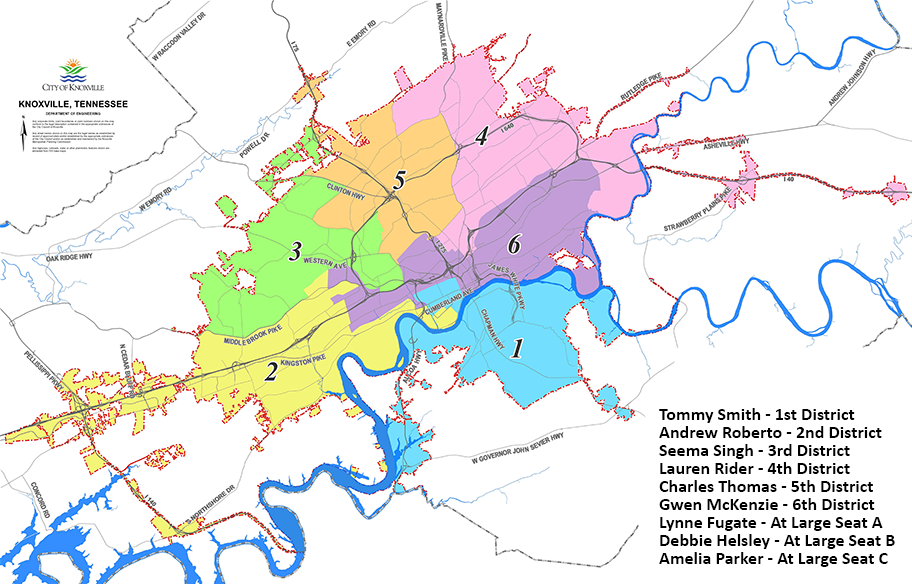
District 1
District 2
District 3
District 4
Jeff Talman
District 6
Questions
1) What do you think is the biggest issue facing Knoxville Residents?
(District 1) Karyn Adams
"We’re growing. Fast. That comes with incredible opportunities to shape this place we call home, as well as real challenges, to make sure no one is left behind. Being intentional, smart, and sustainable is the key."
(District 1) Lindsey Jaremko
"The rising cost of living—especially housing—is straining families across the city. Wages haven’t kept pace, and the safety net isn’t strong enough to catch people when they fall. Displacement, evictions, and housing insecurity aren’t isolated issues—they’re happening all around us, and they’re tied to how we invest public money and who benefits from that investment."
(District 1) Charles Van Morgan
"Three major issues stand out to me: Homelessness attraction, government corruption, and roadway safety.
Knoxville has become a magnet for homelessness without a clear plan to address it, which affects residents and the unhoused alike. Government corruption—whether through favoritism, misuse of power, or lack of accountability—erodes public trust and blocks real solutions. And our roads? They’re dangerous. From reckless driving to poor enforcement, public safety is being neglected on our streets.
These aren’t isolated problems—they’re connected. And I believe we need leadership that’s willing to face all of them head-on."
(District 3) Nick Ciparro
"Currently, it’s been the incredible spending and taxation. The prime example is the $70 million pedestrian bridge to nowhere. We have one of these half-baked bridges over Western Avenue and no one uses it."
(District 3) Frank Ramey
"The cost of living, especially housing, is rising faster than wages, and many residents feel priced out. At the same time, public safety on roads like Western Avenue remains a major concern. We need to act urgently on both fronts."
(District 4) Matthew DeBardelaben
"I believe the biggest challenge and opportunity facing Knoxville is growth. How does a
city grow and still feel like itself? How does the same spirit that attracts new citizens
continue to shine? What do about housing? Transportation? Public safety? Where do
public policy and our quality of being meet?"
(District 4) Jeff Talman
"This applies to everyone but arguably more so for artists and creatives - AFFORDABILITY. Pocketbook issues are THE issues and for my money the city of Knoxville is indifferent to the effects of reckless spending on the lives of people of modest means."
(District 6) Charles Frazier
Affordable housing is a pressing issue in the 6th District and across Knoxville. We need innovative solutions. While high interest rates certainly pose a challenge for homeownership, I'm committed to finding ways to create opportunities for everyone to own a home and secure affordable housing.
(District 6) Stan Johnson
"The biggest issue facing Knoxville residents, especially in the 6th District, is affordable housing and the rising cost of living. Families are being priced out of their neighborhoods, wages aren’t keeping pace with inflation, and too many people are living one emergency away from crisis. We need bold, local action to address this now."
(District 6) George "Cat Dad" Raudenbush
"Failed/Corrupt city leadership which has caused the numerous problems the citizens of Knoxville are facing."
2) What background experiences do you have that make you feel qualified to be on city council?
(District 1) Karyn Adams
"I’ve lived in Knoxville since the early 90s, and in South Knoxville for 22 years. I know this place. I have always seen its potential and worked to be part of what moves the City forward. From my early work at Tomato Head when it was the only thing on Market Square to serving at Ijams Nature Center to expand and preserve our greenspaces. Land use experience, I’ve gained it through my service on Planning Commission for the last five years. Budgeting? I know how to fight for what’s needed as a budget manager inside organizations, for my own firm, and as a board member for area non-profits. Community engagement? I serve on the South Knox Neighborhood and Business Coalition (SKNBC), Lindbergh Forest Neighborhood Association, SKY Youth Aviation Program, and Bike Walk Knoxville Advisory Council. And I’m a mom of two sons. All of these experiences have taught me so much and helped me become a productive leader who can truly get things done."
(District 1) Lindsey Jaremko
"I really do want to stress that the legal qualifications for this office are living in the district, being of age, and not having a felony—and I meet all of them. And I do this because I would like to normalize working people running for local office. Not everyone has the time and financial resources to serve on nonprofit boards and commissions and that doesn’t mean that they are less qualified to represent working people on our City Council. That being said, I’m a master licensed social worker, a civil servant, and an active resident of District One. I’m also deeply committed to protecting our districts’ right to choose our own representation. I’ve consistently advocated for transparency, accountability, and fairness in government—through direct services, policy work, and grassroots organizing. I understand how systems work, where they fail people, and how to make them better."
(District 1) Charles Van Morgan
"Oh, I know I’m qualified—both in life experience and education. I’m the most qualified person on the ballot.
I’ve lived in Knoxville for 56 years and I’m a lifelong Vol fan who knows this city and its people.
I earned a JD from Nashville School of Law, a Master of Arts in Sociology/Criminology from the University of Tennessee, and a Bachelor of Science in Business Administration from Tennessee Wesleyan University. I also completed graduate coursework in Emergency Management at UTK.
And this isn’t just a list of degrees. My education helps me understand how government works, how systems fail, and how to make policy that actually protects people—not politicians. It gives me the tools to spot corruption, improve public safety, and bring smart solutions to city government.
I led the Tennessee Highway Patrol in removing drunk and impaired drivers from our roads. Fatality rates dropped when I was out there because I focused on real results.
I’ve lived through government corruption, and I’ve stood up to it. So yes—I’ve got a PhD in reality, too.
I’m ready to bring all of that to work—for Knoxville."
(District 3) Nick Ciparro
"I own a home and do business in our district for quite some time. I know my community and listen to what they want out of our city government. We haven’t had that for quite some time, so that will be a refreshing change."
(District 3) Frank Ramey
"I’m a small business owner, licensed REALTOR®, and lifelong Knoxvillian. I see firsthand how city decisions impact housing, infrastructure, and neighborhood quality of life. I want to bring that real-world perspective to the table to make city government more responsive and effective."
(District 4) Matthew DeBardelaben
"I grew up in urban Miami, Florida, and have lived in Tuscaloosa, Seattle, Chicago,
Shanghai, Nashville, rural Jefferson County, and Knoxville, Tennessee. I raised millions
of investment dollars for a start-up company and I ran a farm stand with food I grew at
our Market Square Farmer’s Market. I believe these diverse experiences provide me
with a unique perspective.
Additionally, I served six years on the Downtown Knoxville Alliance board (three as the
Chairperson). During this time downtown Knoxville has thrived. I am also in my sixth
year on the Design Review Board. These experiences have helped me learn how the
city operates, and frankly where it doesn’t operate.
Finally, for fourteen years I have led the gaggle of curators for PechaKucha Knoxville. I
believe that this town hall has helped shape our city."
(District 4) Jeff Talman
"I have been involved in community life in Knoxville for the better part of forty years. Here is some of what I have done -
My knowledge and vision for Knoxville is informed by decades of hands on working with fellow citizens of every stripe and station. Here is some of my civic and community involvement in Knoxville over the years - two-time President of Fourth & Gill Neighborhood Association, Elected Empowerment Zone Governance Board, Initiating & Steering Committees for 9County1Vision regional planning initiative, appointed to represent the County Commission 2nd district on the Knox County Convention and Visitors Bureau, chaired that organization's advertising committee, Elected Vice President of my Knoxville Police Department Citizens Police Academy class, member of Caswell Park Task Force, Inducted into the Southeastern Appalachian Whitewater Hall of Fame, member of Knoxville Volunteer Rotary Club since 1997, Knoxville Botanical Garden & Arboretum Board of Directors, Knoxville Preparatory School Community Advisory Board.
As a mortgage banker for the last 23 years, I have opened the door to tens of millions of dollars to help people achieve homeownership, and helped renovate and revitalize some of the most challenging housing in our city. I am in fact renovating my own house at 616 Luttrell St in my beloved Fourth & Gill Neighborhood. It has been a challenge and I have gotten to know first hand just how difficult it is to do business in the City"
(District 6) Charles Frazier
My leadership training from CAC Leadership and my service on the board of the Helen Ross McNabb Center have given me a deep understanding of our community's challenges, especially regarding homelessness and mental illness. I learned firsthand that a significant portion of our homeless population struggles with mental health issues. That's why I'll advocate to the State of Tennessee, directly with the Governor, Speaker of the House, and our representatives, for a local institution similar to Lakeshore to address mental health needs. It's unacceptable that the closest facility for those with mental disabilities is currently in Chattanooga, and we must fix this.
As a former business person in a vibrant Burlington community, I understand the critical role small businesses play. They are the backbone of America, providing jobs and a better quality of life. I will champion policies that support businesses, ensuring every citizen in the city and the 6th District has opportunities for prosperity.
(District 6) Stan Johnson
"I’ve served my community on the front lines for years as a mentor, advocate, and local business leader. I’ve worked with youth, collaborated with neighborhood groups, and helped create pathways for returning citizens. I understand the challenges because I’ve lived them and worked to solve them. I bring real world experience, community trust, and results driven leadership."
(District 6) George "Cat Dad" Raudenbush
"Being qualified doesn't guarantee a individual to be competent, honest, to have integrity, or to be persistent and determined to get the job done. See my experience at: http://www.electcatdad.site go to the cat dad page."
3) What does being on city council mean to you? What kind of meaningful work are you aiming for?
(District 1) Karyn Adams
"It means being able to make a bigger impact. It means listening, advocating, consensus building, learning, and leading. Meaningful work will be ensuring that decisions are made inclusively. And that we are intentional in our growth – to be smart, sustainable, and show the clear input from our communities. This is how we maintain the character and spirit of our City. This is how we improve housing, affordability, reliable transit options, and continue to make Knoxville an ever-better community for us all."
(District 1) Lindsey Jaremko
"Being on the City Council means being accountable to the people—not just the loudest voices in the room, but the most impacted ones. I want to make our budget more democratic, expand public participation, and ensure that our city’s growth doesn’t leave people behind. That’s meaningful to me: shifting power back to residents and making government something that works for everyone."
(District 1) Charles Van Morgan
"Being on city council means truly listening to the people of South Knoxville and the Fort Sanders area — and making sure their voices are heard in city decisions. Too often, those in power serve themselves instead of the people they represent. I want to flip that. This is our government, and it should work for us.
To me, meaningful work means focusing on the basics that matter: fixing neglected roads, repairing the Gay Street Bridge, and making Chapman Highway safer. These aren’t flashy projects — they’re real needs that have been ignored for too long. I'm running to change that."
(District 3) Nick Ciparro
"Representation. It means we have a say in what happens to our community."
(District 3) Frank Ramey
"It’s not about politics, it’s about service. Being on City Council means listening to neighbors, solving real problems, and making sure city government is responsive, transparent, and accountable."
(District 4) Matthew DeBardelaben
"Like Thomas the Tank Engine I want to be useful. I want to be a steward and curator of
positive growth in Knoxville, Tennessee."
(District 4) Jeff Talman
"When elected I will be but one of nine. It is important to engage the citizens of the Fourth District and What kind of meaningful work are you aiming for? City Council as a body is weak and needs to be strengthened. My view is that the body needs to preside over its own meeting and set its own agenda.This will I predict create a healthier civics in Knoxville and a more engage citizenry."
(District 6) Charles Frazier
In essence, my role as a city council member is to be a responsive, effective legislator and steward of public resources, always with the best interests of District 6 and the entire city of Knoxville at heart. This requires not only a deep understanding of policy and community needs but also the ability to build and maintain productive relationships with my colleagues.
(District 6) Stan Johnson
"To me, being on city council means serving with purpose. It’s not about politics, it’s about people. I’m aiming for meaningful, lasting impact: safer neighborhoods, more affordable housing, youth programs that keep our kids out of trouble, and economic development that lifts up everyone, not just the top few."
(District 6) George "Cat Dad" Raudenbush
"A city council person is a member of their community. They are chosen by their community to represent the concerns of the people in their district. It is an honor to server the community that is why no salary should be given to any city council member as it is a civic duty to serve the people. The current city council each receives a yearly salary of $24,000 and $2000 for 3 hours of meetings per month, that comes out to $666,666 per hour plus a benefits package which includes paid vacations, full medical/dental, all meals, additional access to a bottomless tax payer slush fund, for party's and travel anywhere in the world, all local travel expenses and the ability to give themselves raises. THAT WILL ALL END IF I AM ELECTED! Politicians will tell you what ever you want to hear to get what they want, YOUR MONEY! We need to return back to our state constitution where service is an honor, not a luxurious holiday spending spree on tax payer money!"
4) How do you feel about Knoxville’s growth? Is it making the city better or is it hindering what the city used to be?
(District 1) Karyn Adams
"We’re growing. We can’t put up a sign that says, “We’re closed,” nor should we want to. But we can, and should, be intentional and community-oriented in our growth. Growth brings new ideas, new opportunities, and new challenges. A good friend of mine said that Knoxville is a City that wants “progress without change.” Maybe that’s true. But that’s a mindset that causes paralysis. Progress and change are linked. When progress and change are backed by the work of planning, communication, and vision, amazing things can get accomplished."
(District 1) Lindsey Jaremko
"Growth isn’t inherently bad—but unregulated growth that displaces residents, drives up rents, and weakens neighborhood identity is. What made Knoxville special was its sense of community and place. When growth puts profit before people, we risk losing that. We need planning that centers affordability, access, and long-term sustainability—not just what looks good on a real estate flyer."
(District 1) Charles Van Morgan
"Growth can be good — if it benefits everybody, not just developers and insiders. Right now, too much of Knoxville’s growth is pricing people out, destroying what makes this city special, and ignoring basic needs. We need to make sure growth respects our history, our neighborhoods, and the people who’ve built this city."
(District 3) Nick Ciparro
"To be frank, the growth is slowing down. We should be at a reasonable and manageable growth rate soon, and that’s a very good thing. This helps with the housing market and lowers the costs for everyone. As for it making the city better or worse, I’m hopeful that new stability eases any growing pains we encountered."
(District 3) Frank Ramey
"Growth is a sign of success, but unmanaged growth creates traffic, sprawl, and displaces residents. I support smart growth that builds up, not just out, while protecting the character of our neighborhoods."
(District 4) Matthew DeBardelaben
"Both!
But—
One, there is no stop button.
Two, to stop growing is to start dying.
Three, we could get this wrong… but we could also get it very, very right."
(District 4) Jeff Talman
"The growth in our metropolitan area is a mixed bag. The positive is that the demand side will make it possible to develop parts of our city which have needed attention for decades. The downside is the pressure on housing particularly."
(District 6) Charles Frazier
Knoxville's growth is a complex issue with both positive and negative effects on the city. While it's bringing economic opportunities and a more vibrant downtown, it's also creating challenges related to affordability, traffic, and preserving the city's unique character. One of the most significant downsides is the rising cost of living, particularly housing. Knoxville has seen some of the greatest rent growth in the country, and the median income can't keep up with the median home price. Many residents, especially middle- and low-income families, are struggling with housing costs, and homelessness has become a more visible issue.
(District 6) Stan Johnson
"Growth is not a bad thing, but it has to be fair, balanced, and inclusive. Right now, development is happening to us, not with us. We must protect our culture, neighborhoods, and people while welcoming new opportunities. Growth should build up the community, not push it out."
(District 6) George "Cat Dad" Raudenbush
"The city of Knoxville is in decline and debt. The only growth happening is the mayor has gotten filthy rich in the tens of millions of dollars by selling our city out to big corporate developers that are buying everything up. City leadership is forcing small business to close, rents to sky rocket leaving hardworking young people to sleep in their cars from inflated property values, rents and soaring taxes! That's whats growing! Don't leave out the fact that our homeless population and crime rate are increasing everyday!"
5) What do you think the city needs the most right now?
(District 1) Karyn Adams
"More options for housing, and affordable options across the entire spectrum. Care for the unhoused that is truly structured to meet the individual’s needs, and that effectively connects the many providers to ensure immediacy and reliability. Safe, reliable, multi-modal transportation."
(District 1) Lindsey Jaremko
"We need a commitment to public investment that prioritizes care over punishment, housing over speculation, and access over exclusion. That means more money for public transit, community housing models, food access, and social services—not more closed-door deals or tax hikes that hit working people the hardest."
(District 1) Charles Van Morgan
"Accountability, safety, and services. The city needs honest leadership that puts people first, not political insiders. We need safer roads, repaired infrastructure, and real solutions for housing and affordability."
(District 3) Nick Ciparro
"An audit on spending, some traffic management efforts, and to change the recode issue."
(District 3) Frank Ramey
"Attainable housing, safer streets, and more responsive city leadership. We need bold, practical steps to address affordability, safety, and how we support working families."
(District 4) Matthew DeBardelaben
"Gumption. Shrewd and spirited, innovative resourcefulness. We made the rules, we can
remake the rules."
(District 4) Jeff Talman
"Knoxville needs more common sense. The city needs to be more disciplined in determining what are wanna dos and what are gotta dos. The city is run like a candy store. My opponent will be a rubber stamp for the mayor. I will honor my oath to the citizens of the Fourth District. I will of course work with the mayor at every opportunity but will not be controlled by her or anybody else.I am a firecely independent person and I think that is what the city needs - honest, grown up dialogue."
(District 6) Charles Frazier
Based on recent reports and city initiatives, here are some of the most pressing needs for Knoxville, Tennessee:
Affordable Housing: This is a major concern. There's a high demand for housing, but the supply is low. The city is actively working on a strategy to increase the number of affordable housing units, with goals to develop thousands of new units in the coming years. Many residents, especially renters, are "cost-burdened" meaning they spend a significant portion of their income on housing.
Addressing Homelessness: Tied to the housing crisis, homelessness is a significant issue. The city has an Office of Housing Stability and is working with various organizations to prevent and respond to homelessness, allocating funds for emergency services.
Community Health: Health assessments have identified several key health priorities for the community. These include:
Substance Misuse and Mental Health: These are cited as top concerns. There's a need for increased access to mental health treatment, as many people who need care don't receive it.
Chronic Diseases: Diabetes, cancer, and heart disease are major health challenges for the community.
Adverse Childhood Experiences (ACEs): There's a focus on creating a trauma- informed culture to address the long-term effects of childhood trauma.
Climate Change and Sustainability: The city recognizes that climate change is intensifying challenges like extreme heat, storms, and air pollution. Knoxville has set ambitious goals to reduce greenhouse gas emissions and is working to create a more resilient and sustainable future. This includes initiatives to improve infrastructure and support clean energy.
Public Safety: Ensuring that people feel safe in their neighborhoods is a primary function of city government. The city is committed to continuous improvement in its police and fire departments and collaborates with community partners on prevention and crisis responses.
(District 6) Stan Johnson
"The city needs bold leadership that listens. We need to invest in affordable housing, youth development, infrastructure, and job creation, especially in overlooked communities. We also need more accountability and understanding in how city decisions are made and how resources are allocated."
(District 6) George "Cat Dad" Raudenbush
"A city audit, indictments and prosecutions. Corruption has no place in the city of Knoxville!"
6) What do you think the role of local government should be?
(District 1) Karyn Adams
"Local government should get good things done. It should be responsive and fair. It should have a thorough understanding of why things have been done a certain way and should not be afraid to try new approaches or initiatives. It should be strategic in visioning in order to prioritize people, communities, and our natural resources."
(District 1) Lindsey Jaremko
"To protect the public good, redistribute resources to benefit the community as a whole, and make democratic participation real—not just performative. Local government should be the closest form of government to the people, and yet it often feels the furthest away. That’s a disconnect I want to change."
(District 1) Charles Van Morgan
"To serve the people. Not special interests, not party politics, and not personal agendas. Local government should make sure basic services work, neighborhoods are safe and clean, and that residents have a real voice in what happens to their city."
(District 3) Nick Ciparro
"Local government is the closest representation we have. Supporting infrastructure and maintaining order (fire, police, trash pickup) should be the priorities."
(District 3) Frank Ramey
"Local government should focus on the basics: safety, infrastructure, housing, and accountability. It should be where people feel heard and see real action, not bureaucracy."
(District 4) Matthew DeBardelaben
"Customer service."
(District 4) Jeff Talman
"The city should focus on boring things and do them well - Gay Street Bridges, public safety, spending money wisely, helping existing businesses thrive and recruiting new ones. The city should do those things which only it can do and get out of doing things that it will and never can succeed at."
(District 6) Charles Frazier
The role of local government is to serve the needs of a community by providing essential services and making decisions that directly affect residents' daily lives. Unlike state or federal governments, local governments are closer to the people, allowing for a more direct and responsive approach to governance.
(District 6) Stan Johnson
"Local government should be the bridge between people and opportunity. It should protect the vulnerable, support small businesses, maintain public safety, and create environments where all residents, not just a select few can thrive."
(District 6) George "Cat Dad" Raudenbush
"To serve the People. The people are the Government according to the Tn Constitution. When we allow others to rule over us We become the governed, subjects to those we allowed to rule over us. The PEOPLE are the government, KNOXVILLE NEEDS TO WAKE UP! We can govern ourselves instead we have become lazy and have given control to a few greedy corrupt individuals. Each one of us, every citizen in the sixth district has the duty and responsibility to serve our community and one another. Forming citizen committees is the best way to get back to our constitution and return the power back to the people. Corrupt individuals have taken over and ruined the City of Knoxville. Only the people can take it back."
7) How do you plan to stay connected to the needs of your constituents?
(District 1) Karyn Adams
"I’ve been working and participating in our community since the early 90s. It’s this engagement that has informed my opinions, built relationships, and given me the experience to serve on City Council. I’ll continue to participate in the life of District 1 and our City, attending neighborhood meetings and engaging with communities to ensure I know what ideas and concerns exist. I will be accessible and transparent and highly communicative, asking questions and seeking input."
(District 1) Lindsey Jaremko
"I believe in deep canvassing, regular neighborhood meetings, and keeping the door open year-round—not just during campaign season. I’ll prioritize creating systems for participatory budgeting and public feedback that are accessible, consistent, and centered on those who are often ignored when they bring their concerns and knowledge to the City Council. Staying connected means not just listening—but making it easier for people to be heard and to see their input reflected in city decisions."
(District 1) Charles Van Morgan
"I’ve already been knocking doors, listening face to face, and I won’t stop if I get elected. I’ll host regular meetings in the district and online — so people don’t have to chase me down. I’ll respond to calls and messages personally. You’ll never have to wonder where I stand or how to reach me."
(District 3) Nick Ciparro
"Open access to email, text, and other points of contact are the first step. Going to neighborhood association meetings and generally being available to the citizens is also a key."
(District 3) Frank Ramey
"I’ll knock doors year-round, not just during campaigns. I take calls, show up, and listen; and I’ll keep doing that in office."
(District 4) Matthew DeBardelaben
"The same way I stay connected now. Be out and about. Listen and learn. Travel and
explore. Foster insatiable curiosity."
(District 4) Jeff Talman
"I will stay in touch and engaged by showing up, paying attention and listening."
(District 6) Charles Frazier
My plan to bring the community together and make myself accessible through small-scale gatherings is rooted in fostering genuine connections and creating comfortable, low-pressure environments for dialogue. Instead of relying solely on large, often impersonal community-wide events, I'd prioritize a consistent and varied schedule of smaller, more intimate interactions.
(District 6) Stan Johnson
"I plan to stay connected by being present, accessible, and responsive. That means regular town halls, community forums, walking the neighborhoods, and creating digital and in-person feedback systems. I don’t believe in representing people from behind a desk. I’ll be out in the district, every week."
(District 6) George "Cat Dad" Raudenbush
"Forming citizen committees in each of the 6 zones in the 6 district. These committees contact the district representative when issues come up and within minutes the district representative contacts city department heads and the issue is addressed that day. That is how it is supposed to work."
8) How do you propose the city can help alleviate the rising cost of housing coupled with stagnant wages for many who live here?
(District 1) Karyn Adams
"The first part of the solution is basic supply and demand. We need to build more housing, of all types, to address the housing crisis. It is important that as we build we are ensuring that options are truly affordable, and not just of one price bracket or type. In parallel, we need to expand our City’s tools from TIFFs and PILOTs for only larger developments or new builds and extend to smaller ones that are pre-existing. Such options could help us explore ways to incentivize more avenues for affordability."
(District 1) Lindsey Jaremko
"We need to think strategically and creatively to protect our local renters, more funding for eviction prevention, and serious investment in alternative housing models like community land trusts and cooperatives. We also need to hold developers accountable for affordability—not just offer them incentives with no strings attached. Wages are part of the equation too, and city policy can support local hiring, union jobs, and fair labor standards."
(District 1) Charles Van Morgan
"We need to stop selling out to out-of-town investors and start supporting local residents. That means incentivizing affordable housing, cracking down on slumlords and price gouging, and making sure city policies aren’t pushing people out of their own neighborhoods. We also need to support better wages by backing small business growth and city contracts that prioritize fair pay."
(District 3) Nick Ciparro
"Housing demand is already lowering so that should do some of the work. Curbing high priced development via codes enforcement is a way the city can help. An example of this would be to curb the developments that intend to only offer higher priced units, like $2000+ for a one-bedroom apartment. No up-and-coming person can afford this, but these developers who do this are only concerned with ROI, and how they can flip the development."
(District 3) Frank Ramey
"We need to build more types of housing, townhomes, duplexes, and infill, not just expensive single-family homes or luxury apartments. The city can also use incentives to prioritize affordability and workforce housing in areas where it makes sense."
(District 4) Matthew DeBardelaben
"On the housing side we need an increasing housing stock with a variety of choices. We
especially need choices in the 500 – 1500 square foot range. We also need to review
our building code and consider which constraints are not necessary for life safety and
environmental sustainability. Removing these constraints reduces the cost of building.
On the wages—we need collective action. I am not sure how to accomplish that."
(District 4) Jeff Talman
"Every time the city gets into housing the more distortions it creates. Stuff costs what stuff costs and that will never change."
(District 6) Charles Frazier
Addressing the complex issue of rising housing costs and stagnant wages requires a multi-faceted approach from the city government. A city's ability to act is often shaped by a combination of local policies and federal or state-level programs. Here are some of the key strategies I would work with the city to consider: Increasing the Supply of Affordable Housing, Financial Assistance and Support for Residents, Addressing Wages and Economic Stability, and Tenant Protections.
(District 6) Stan Johnson
"We need to expand affordable housing incentives, cap predatory development, and partner with community land trusts. At the same time, we must support local job creation and workforce development—so people don’t just live in Knoxville—they can thrive here. It’s not enough to make housing cheaper; we must also make paychecks stronger."
(District 6) George "Cat Dad" Raudenbush
"Again, replace city leadership. Nothing is going to change until competent leadership is in place and accountability is enforced."
9) Do you have any plans to help those who are unhoused?
(District 1) Karyn Adams
"Yes. First, work with the Knoxville-Knox County’s Office on Housing Stability to support the comprehensive integration of services and ensure a reliable and immediate response to individual’s needs. Second, support the efforts of local non-profits to impact significant change where it matters most, in someone’s first year of experiencing homelessness. Data clearly shows that if a person can be helped within the first year, the risks of mental illness, addiction, or chronic homelessness can be greatly reduced. I support a “housing first” model, to help an individual shift from survival to safety, and then from safety to the ability to actively contribute to the community again."
(District 1) Lindsey Jaremko
"Yes. The city must invest in housing-first models, expand partnerships with service providers, and open low-barrier shelter options that meet people where they are. We also need to stop criminalizing homelessness and start treating it as the public health and human rights issue it is. I believe these strategies are consistent with the values of the people of Knoxville, but they are also in direct conflict with EO 14162, a recent executive order signed by President Trump, which will upend the way cities are funded to address our unhoused population. We will need people on the City Council who are very knowledgeable about social services and public policy. That is why I believe that as a licensed master social worker with both nonprofit and state government experience, I am the most qualified and prepared person running in District One."
(District 1) Charles Van Morgan
"Yes. We need a smarter, more compassionate approach. That includes low-barrier shelters, mental health services, and long-term housing solutions — not just sweeping camps and pretending the problem doesn’t exist. Everyone deserves dignity and a path forward."
(District 3) Nick Ciparro
"YES. Helping those folks should be a sign of how we act as a city. Instead of $70 million on a pedestrian bridge, we should be looking at a facility for these people for far less money. Many are facing addiction or mental illness, so pretending that they will just “go get a job” isn’t the answer."
(District 3) Frank Ramey
"I support proven approaches like permanent supportive housing and better coordination between mental health, addiction recovery, and housing services. This is about dignity, safety, and smart resource use."
(District 4) Matthew DeBardelaben
"Yes.
First, implement strategies that stop the growth of our unhoused population. Fund
groups like Legal Aid of East Tennessee who provide counsel to individuals and families
experiencing eviction. They help soften the landing and most importantly can keep the
eviction off of their public record. Additionally, offer short-term housing opportunities
after these evictions have occurred. Create a safe space for these individuals and
families to reestablish themselves.
Secondly, implement low-barrier, judgement-free shelter for our unhoused. Surround
these shelters with resources and services. I believe this will lead to real progress for
our unhoused neighbors."
(District 4) Jeff Talman
"We need a new approach to our homeless catastrophe. What we are experiencing now is not good for the homeless population and not good for the people around the area who have to put up with the filth and chaos."
(District 6) Charles Frazier
Knoxville is grappling with a growing homelessness problem, primarily driven by a severe lack of affordable housing. While the city and various organizations are implementing strategies and investing resources, the scale of the challenge necessitates ongoing, concerted efforts to increase housing supply, improve affordability, and provide robust support services to those in need.
(District 6) Stan Johnson
"Absolutely. We need a compassionate and comprehensive strategy. That includes more transitional housing, mental health support, job training, and rapid rehousing programs. I will also work with churches and nonprofits to coordinate resources and reduce duplication of services. Housing is a human right—we must treat it that way."
(District 6) George "Cat Dad" Raudenbush
"There are 7 programs right here in the city with plenty of money, housing and assistance but most of them are being mismanaged and plundered by corrupt management including KCDC which is under investigation.
Yes, No banks involved private financing with no interest. I serve Project Foundations for Family's (www.pf4f.org) I have personally helped many individuals obtain land and housing on a minimum wage income.
This program doesn't accept any tax payer money or grants. It is the most successful program in the state of Tennessee that doesn't take public or tax payer funds. Every candidate will tell you they need more money to fix the problems, that's the problem! The bigger the problem the more money they want from the local, state and federal tax payer. ALL of the problems in Knoxville can be resolved without any additional funds in some cases no funds at all."
10) What are your plans to address infrastructure for our growing city?
(District 1) Karyn Adams
"I have never met a person who didn’t love a sidewalk, who didn’t appreciate a street that felt safe (for cars, bikes, and pedestrians), and who didn’t want their community to be connected to the greenway and trail systems. These infrastructure items cost money and the list of needs keeps getting longer. I want there to be clear and transparent understanding of how items are prioritized, how they are funded, and I want to have a reliable timeline for when projects will begin and reach completion. The Sevier Ave Streetscapes are a good example of a project that has been prioritized, put on a timetable, bi-weekly updates are provided by the City to the Merchants Association and community leaders, and every effort is made to diminish the construction impact and stay on track. This is how all projects should be managed. Much of the problem is around lacking information, but prioritizing funding and aligning it with the most pressing needs should happen consistently."
(District 1) Lindsey Jaremko
"We need to shift our priorities toward people-first infrastructure: sidewalks, bike lanes, bus shelters and improved bus service. Too often, infrastructure spending benefits private developers more than residents. I’d push for equitable capital improvements that make daily life better for working people across all neighborhoods—not just the ones with the loudest lobbyists."
(District 1) Charles Van Morgan
"Start with what’s broken. That means fixing roads, repairing bridges like the Gay Street Bridge, and improving traffic safety — especially on dangerous corridors like Chapman Highway. We also need to plan smarter so that new development pays its fair share and doesn’t overload what we already have."
(District 3) Nick Ciparro
"Infrastructure is a key issue due to the fact we have grown. Unfortunately, our current government encouraged stuffing giant apartment complexes into small neighborhoods with zero thought on the infrastructure issues that would come up. This is why residents that have been here have noticed the incredible uptick in traffic issues. Rethinking development permitting and adjusting the current spending to match the growth is the key to solving this issue."
(District 3) Frank Ramey
"Western Avenue, Pleasant Ridge, and other key corridors need major safety upgrades. I support more traffic calming, sidewalk investment, and smart street design that reflects how people actually use our roads."
(District 4) Matthew DeBardelaben
"We need traffic-calming strategies employed along our primary arteries and on our
neighborhood streets. We need to prioritize sidewalks near our parks and schools and
especially within the “Parental Responsibility Zones”.
I also believe there is some low-hanging fruit, areas where we can build Complete
Streets, which include traffic lanes for private cars and public transport, truly protected
bike lanes, and sidewalks that are interesting to walk on. These areas include North
Central, East Magnolia, and Sevier Avenue."
(District 4) Jeff Talman
"My plan is to first realize that automobiles and not going away anytime soon. We need to work with the development community to builld our city and in the areas where it is most appropriate to do so."
(District 6) Charles Frazier
My approach to addressing infrastructure needs, particularly potholes and issues in public facilities, would involve a multi-pronged strategy focusing on assessment, prioritization, efficient repair, preventative maintenance, and community engagement.
(District 6) Stan Johnson
"I’ll fight to prioritize critical infrastructure in underserved areas including better roads, sidewalks, stormwater systems, broadband, and public transit. Growth is meaningless if the foundation isn’t there. I also want to create job opportunities by connecting infrastructure investment with local workforce development."
(District 6) George "Cat Dad" Raudenbush
"First we have to have an audit to find out where hundreds of millions of dollars of tax payers money has gone since the current leadership has failed to produce receipts where the money went to.
Bring in two big private investors (not corporations) to begin a huge tourism industry in Knoxville, as ours is in rapid decline and with huge debt. This new tourism industry will create thousands of jobs here in the city. We will involve all our citizens in this project as it will be the largest project of its kind in the state of Tennessee. We will negotiate our debt within one year to zero. Knoxville can become the Cat Capitol of the United States and the Nations "City of Tiny Homes" custom built under $50,000 with no banks involved. All plans have to be approved by the Citizen committees first, not the city council. Each district representative convenes with the other district representatives and the council as a whole (all districts) presents the peoples will to the city mayor. The mayor carries out the councils proclamations and declarations. Currently the mayor dictates her wishes to the council and they obey her agenda. That is not how the Tennessee State Constitution instructs us to run our government. This will reduce private property taxes see: electcatdad.site go to cat dad page."
11) Assume all federal & state dollars disappear, what programs would you fight hardest to fully fund with City funding alone?
(District 1) Karyn Adams
"If all federal and state dollars disappeared, those who would be hurt the most are those who are already most vulnerable. I would fight hardest to fund the programs that provide support for those most in need."
(District 1) Lindsey Jaremko
"Eviction prevention, public transportation, social programs, and harm reduction. These aren't luxuries—they're essential to a safe, thriving city. I’d also fight to fully fund emergency rental assistance and legal support for tenants, which have been critical lifelines in recent years.
Currently, we lean heavily on local nonprofits to hold up our social safety net. When residents ask for help, they're often told to call 2-1-1. Having evaluated that system while working at the United Way of Greater Knoxville, I can tell you: the database is outdated and largely ineffective. One of the first ordinances I’d introduce would require any city-funded services provided by contracted agencies to regularly update the information pertaining to their publicly-funded programs in our 2-1-1 system. This would give residents access to accurate, actionable help—and create more transparency and accountability around how local funds are used."
(District 1) Charles Van Morgan
"Public safety, road repair, and housing support. The essentials that keep people safe, housed, and mobile. If the state or feds step out, we step up — and we do it by cutting waste and putting people first."
(District 3) Nick Ciparro
"I honestly would have to evaluate those case by case. Many of our funding sources have these links with different percentages incurred. So, saying “cut them all” or “save X program” is hard to judge without looking into it properly."
(District 3) Frank Ramey
"I’d protect funding for core services like emergency response, housing assistance, and public transportation, the things people depend on most when times get tough."
(District 4) Matthew DeBardelaben
"Continued financial investment in organizations like Legal Aid of East Tennessee as a
strategy to address the challenges of our unhoused population
Expanding our police-mental health collaboration services and launching a separate
community response program
Creating a new position in our Office of Neighborhood Empowerment that focuses on
our wonderfully increasing immigrant communities (much like Chattanooga's Office of
New Americans)"
(District 4) Jeff Talman
"First let me say that that will put a premium on how we focus on generating revenue from productive activity so we keep the rate of taxation as low as possible. Roads, fire and police, engineering, The boring invisible stuff. Citizens need to have skin in the game and ownership of what is going on in the city."
(District 6) Charles Frazier
I would prioritize funding for the most fundamental and non-negotiable functions of the city that directly impact public safety, health, and well-being. The catastrophic loss of all federal and state funding would force a complete restructuring of the budget, but my fight would focus on these three core areas, in order of priority:
1. Public Safety: The absolute top priority would be the full funding of the Knoxville Police Department, the Knoxville Fire Department, and the city's emergency medical services. The primary role of any government is to protect its citizens. Without federal and state dollars, these departments would face a severe crisis. I would fight to ensure these services are not only maintained but also equipped to handle the increased demand that would likely arise from the widespread societal disruption.
2. Essential Infrastructure and Public Health: Next, I would prioritize the maintenance and operation of the city's essential infrastructure, including:
Public Works: Fully funding the departments responsible for road maintenance, waste collection, and the upkeep of public facilities. A city cannot function without passable roads and proper sanitation.
Utilities: The city's water, sewer, and storm drain systems would need to be fully funded to prevent a public health crisis. This is a critical function that cannot be outsourced or allowed to fail.
3. Core Social Services: While many social programs rely heavily on federal and state grants, a basic safety net would be crucial to prevent a humanitarian crisis. I would fight hardest to fully fund streamlined programs that address the most immediate needs:
Homelessness and Shelter Services: Providing basic shelter and support for the city's most vulnerable population to ensure no one is left on the streets.
Food Security: Supporting local food banks and community kitchens to provide essential nourishment.
Public Transportation: Maintaining a core bus system to ensure residents can access jobs, medical appointments, and essential services.
While programs in education, arts, parks, and economic development are vital for a thriving community, the scenario of losing all external funding necessitates a return to the most basic, life-sustaining functions of government. My fight would be to save the most foundational pillars of the city first.
I will now perform searches to get a better understanding of the current structure of the City of Knoxville government to provide a more detailed and specific response. After researching the City of Knoxville's budget, it's clear that while a significant portion of the city's budget comes from local sources, a substantial amount of federal and state grant money is also used to support critical programs. The loss of these external funds would be devastating, requiring a drastic reprioritization.
Based on this information and the principles of essential government functions, here is my refined list of programs I would fight hardest to fully fund with City of Knoxville dollars alone:
1. Public Safety: This remains the top priority. The Knoxville Police Department and Knoxville Fire Department, including emergency medical services, receive a significant portion of the city's general fund budget. However, as the research shows, federal grants also fund specialized training, equipment, and community policing initiatives. I would fight to redirect all possible city funds to maintain staffing levels, response times, and essential equipment for these departments, even if it means eliminating specialized grant-funded programs. The core duty of protecting lives and property must be upheld.
2. Infrastructure and Public Works: The research indicates that the City of Knoxville uses federal grants for major infrastructure projects like road safety improvements and stormwater management. Without these funds, the city's ability to maintain its basic infrastructure would be severely compromised. I would fight to allocate city funds to maintain the core public works functions, such as road and bridge repairs, street lighting, waste collection, and water/sewer systems. This is crucial for public health and economic stability.
3. Basic Human Services: This is where the loss of federal and state dollars would be most acutely felt, as many programs for housing, food security, and poverty assistance are heavily reliant on these grants. The city's current budget shows some local allocation to these areas, but it is often multiplied by outside funding. I would fight to create a city-funded "services" initiative to support the most critical functions of local partners like the Knoxville-Knox County Community Action Committee (CAC). This would prioritize providing direct aid for emergency shelter, food banks, and housing support to prevent a complete collapse of the social safety net. Programs for youth development, arts, and long-term economic development, while valuable, would need to be re-evaluated and likely scaled back significantly to support these most basic needs.
(District 6) Stan Johnson
"If federal and state funds vanished, I would fight hardest to protect:
Affordable housing programs
Youth enrichment and education
Public safety and community policing
Mental health and addiction services
These programs save lives, prevent crime, and build stronger communities."
(District 6) George "Cat Dad" Raudenbush
"They all ready have that's why we need an audit. This is a matter for the citizen committees (The People) to decide in each zone. The representative for each district helps to organize these committees but cannot interfere with committee decisions. The rep is required to provide information and data for the citizen committees to make a decisions and find resolutions. Every zone in every district is different that is why it is vital for the people in those zones to come together and make those decisions."
12) What are your thoughts on the Vision Zero program and do you plan to continue the program's mission?
(District 1) Karyn Adams
"I am on Bike Walk Knoxville’s Advisory Council and fully support the Vision Zero program. In its first year it has helped diminish road fatalities through active education and installation of safer infrastructure. I appreciate the current administration’s support of the program and do plan on continuing to support Vision Zero’s vital work."
(District 1) Lindsey Jaremko
"I support Vision Zero and would push for it to be taken seriously, with real accountability and funding. Every fatal crash is preventable, and street design is policy. We need slower speeds, safer crossings, more sidewalks, and transit-friendly planning—not just car-centric growth."
(District 1) Charles Van Morgan
"The mission is right — no one should die just trying to get home. I’d continue and expand Vision Zero by focusing on dangerous intersections, better lighting, sidewalks, and holding the city accountable when safety is ignored."
(District 3) Nick Ciparro
"I like the idea of zero traffic deaths, and I’m certain everyone agrees, but I ask, “how are they really going to do this?” I’m open to see what this could become, while rightfully pragmatic."
(District 3) Frank Ramey
"Yes, I support it. Every traffic death is preventable. Vision Zero provides the framework to redesign dangerous roads and prioritize human lives over speed."
(District 4) Matthew DeBardelaben
"I support the aspirations of our Vision Zero program. I say let’s accomplish it sooner."
(District 4) Jeff Talman
"I am supportive of the goals of reducing if not eliminating pedestrian and bicycle fatalities. The problem I have is that it is an attempt to graft onto Knoxville a Eurocentric vision of public streets which in many cases is inappropriate for Knoxville. For example Broadway is also US 441. The idea of bicycling on that road is laughable. I would just as soon bicycle on the interstate. As a bicycler and walker myself I would do our best to civilize Broadway but keep pedestrians and biker to the side streets. I have been to Europe and what they have in many cities there is terrific. But it is a fools errand to force it on Knoxville.."
(District 6) Charles Frazier
The mission of Vision Zero—to eliminate traffic deaths and serious injuries—is a goal that resonates with communities aiming to create safer and more equitable transportation systems for everyone. Public safety is one of my core priorities
(District 6) Stan Johnson
"I support Vision Zero. Every life matters. I will work to expand it by improving pedestrian safety, adding traffic-calming measures in high-risk areas, and ensuring low-income neighborhoods aren’t left behind in traffic and transit planning."
(District 6) George "Cat Dad" Raudenbush
"The 6th district citizen committees will determine this for their district. My thoughts are that there is some good planning that went into the program however, improvements can be made that is only my opinion I do not get to make that decision."
13) Will you work to ensure accountability and transparency regarding ICE's activities in the region?
(District 1) Karyn Adams
"Yes."
(District 1) Lindsey Jaremko
"Yes. Everyone deserves to feel safe in their community, regardless of immigration status. We must hold our government accountable for the actions and policies carried out in our name and with our tax dollars. Right now, the mayor’s office holds near-total control over the city’s budget—even over the legislative branch, City Council. If we want real accountability, including around ICE cooperation with local enforcement, we have to shift that imbalance. I support giving the City Council greater budgetary authority so the people of Knoxville can have a stronger, more democratic say in how our city operates."
(District 1) Charles Van Morgan
"Absolutely. No secret raids, no backdoor deals. Knoxville should not be aiding in the abuse of human rights. We need full transparency, community oversight, and strong legal protections for residents, regardless of status."
(District 3) Nick Ciparro
"They are doing the job they have been entrusted to do. And like any other law enforcement, they need to have accountability and transparency to help them do their job with the full support of our city."
(District 3) Frank Ramey
"City government serves best when it stays focused on local issues, not federal immigration enforcement. I support transparency and policies that make sure all residents feel safe accessing city services and interacting with police, regardless of immigration status."
(District 4) Matthew DeBardelaben
"Yes."
(District 4) Jeff Talman
"Of course."
(District 6) Charles Frazier
The immigration system is fundamentally broken, and until a truly bipartisan effort addresses it, we're just putting a band-aid on a volcano. This is a federal issue, but the lack of seamless coordination with local law enforcement is creating a crisis.
As a city council person, I will take several actions to ensure accountability and transparency regarding ICE's activities, primarily by leveraging my local authority, engaging with the community, and advocating at higher levels of government.
(District 6) Stan Johnson
"Yes. Our local government must stand up for civil rights and community trust. I will push for transparency, ensure that local resources aren’t used to support unjust detentions, and work with immigrant advocacy groups to protect our neighbors from overreach."
(District 6) George "Cat Dad" Raudenbush
"Our State Constitution is the strongest state constitution in the nation. The 6th District representatives is responsible for making sure the Rights of every Citizen are protected. The representative is the shepherd of the flock. I have a law background as a Guardian ad Litem and specialize in constitutional and property law. The representative's duty and responsibility is to protect the citizens in their district. I will assure every non-citizen has the opportunity to gain citizenship. I am helping a friend with that process now that lives in our district. We need good citizens."
14) What specifically will you do to help our community with food insecurity?
(District 1) Karyn Adams
"I will support the efforts already at work and support their expansion, such as Beardsley Farm, Knox County Community Gardeners and Growers Alliance, Second Harvest Food Bank, Nourish Knoxville, and the Food Policy Council. I will also work to establish commercial development incentives that generate the groceries and bodegas that our communities are asking for to help eliminate food deserts."
(District 1) Lindsey Jaremko
"I’d support and invest in the incredible grassroots work already happening in Knoxville—especially around urban agriculture, food cooperatives, and community-run fridges and pantries. Groups like BattleField Farm & Gardens and Rooted East are leading efforts that nourish people and build community resilience.
I’d also work to improve coordination between service providers. As I mentioned earlier, the 2-1-1 system has powerful, underused infrastructure. If we were to fully utilize the existing software capabilities and started requiring city-funded organizations to keep their listings up to date—we could better connect people to food resources and get a clearer picture of where needs still exist. That kind of data-informed approach would help us use limited resources more efficiently and equitably."
(District 1) Charles Van Morgan
"Partner with local farms, nonprofits, and churches to expand food access. Support community gardens, food co-ops, and mobile markets. And make sure every child in Knoxville can eat at school — no exceptions, no shame."
(District 3) Nick Ciparro
"I ask, “what I can do?” We have grocery stores every mile or so. Last I checked, this was called something else, and that issue was mute."
(District 3) Frank Ramey
"We should support mobile food programs like Mobile Meals, reduce red tape for food nonprofits, and explore partnerships that bring fresh produce into underserved areas, especially in District 3."
(District 4) Matthew DeBardelaben
"I honestly do not know what I can do on City Council to support this issue… I will dig in on this issue and report back."
(District 4) Jeff Talman
"I am not sure this is something the City Goverment can do anything about in as much as there are currently providers in this space."
(District 6) Charles Frazier
In essence, a Knoxville city council person's role is to create a supportive policy environment, allocate resources effectively, and collaborate with community partners to build a sustainable, just, and equitable food system for all residents.
(District 6) Stan Johnson
"Food insecurity is a silent crisis. I will work to expand community gardens, mobile markets, and partner with local grocers to bring fresh, affordable food to underserved neighborhoods. I also support funding local food banks and expanding SNAP access through city-supported tech and outreach."
(District 6) George "Cat Dad" Raudenbush
"We have a good food supply here in Knoxville, the problem is with the distribution chain and fraud and misuse of the distribution. With the citizen committees we know where the needs are, where the supply is and we connect the supply with the demand. The citizen committee is essentially a rapid response team to the district representative. I have been working with a senior community over on McConnell Street. Steve Underwood leads the Citizen Committee in his zone you can contact Steve about the food distribution program he started for his community. Again, these Citizen committees are vital to returning the power back to the people, without them the people/citizens have no voice. If you don't believe me try calling your city council person over your district. Good luck having them return your call let alone helping you resolve an issue. Politicians will tell you anything to get your vote and after they get it you more than likely will not hear from them again."
15) What are your thoughts on current and proposed city tax increases and decreases?
(District 1) Karyn Adams
"This has been a popular question across every survey and outlet! It’s important that folks know the proposed tax increase is an option I will be voting on just like everyone else. My vote counts no more, no less. If I am elected, I will inherit the responsibility of stewarding whatever scenario voters choose. That will either be ensuring that the monies raised by a local option sales tax are truly spent on what has been promised – infrastructure needs and affordable housing – or I will be tasked with looking for other means to accomplish the needs of our City. Currently, I am still seeking greater definition and clarity from the City to ensure that the proposed local option will benefit District 1 in meaningful, desired ways and I am talking to voters about their preferences on the sales tax."
(District 1) Lindsey Jaremko
"I oppose regressive tax increases—like the proposed sales tax hike—that place the heaviest burden on working people. Even those who haven't taken a clear stance on the sales tax have called for more accountability in how that revenue would be spent.
The most effective way to ensure public dollars are used responsibly is to give City Council real oversight of the budget. Right now, the mayor holds nearly all fiscal power. That needs to change. I support shifting toward community-led investments through transparent, participatory budgeting—so residents have a direct say in shaping the future of their neighborhoods."
(District 1) Charles Van Morgan
"People in Knoxville are already feeling squeezed. I don’t support raising taxes on residents just to cover for waste or bad decisions. My plan would actually shift the burden — lower property taxes for Knoxville residents while increasing sales taxes that are largely paid by tourists and out-of-towners.
Knoxville brings in a lot of visitors. If they’re using our roads, bridges, and services, they should help pay for them — not just hardworking residents. That way, we boost city revenue without putting the squeeze on local families and homeowners. Residents should reap the benefits of tourism — not carry the weight of it."
(District 3) Nick Ciparro
"Absolutely no increases. If the city didn’t constantly spend money in the worst ways, we wouldn’t have this issue. I warned everyone 4 years ago about spending north of $100 million on the stadium, and all of the supporters ridiculed me for it. Now they can own the problem they created, instead of having their hands out today."
(District 3) Frank Ramey
"I’m cautious about any tax increase that doesn’t have a clear timeline or strong oversight. I believe in sunset clauses, public tracking, and ensuring voters stay in control of long-term tax decisions, including rolling them back."
(District 4) Matthew DeBardelaben
"My vote on the proposed sales tax increase will carry the same weight as yours—one.
In November, my one vote will be yes on the sales tax increase.
Why? Knoxville is growing. This is an opportunity to make an investment in our physical
and social infrastructure, nurturing the Spirit of Knoxville. It is also an opportunity to
make an investment in our most vulnerable communities to ensure that we all
experience the benefits of this growth, together."
(District 4) Jeff Talman
"I am an emphatic no on the sales tax increase. OUr hard working neighbors are already stretched. If you are a wage earner, retiree, fixed income senior, or otherwise of modest means, and there are many who fit this description in your neighborhood and throughout the Fourth District, then we have to understand how much these folks have been harmed by inflation of the last five years and a tax increase for discretionary things is cruel. We need to foster an environment of thrift in City Government and spend less and generate more.revenue."
(District 6) Charles Frazier
When it comes to the city's budget, I believe we need to be more responsible. I do not support a tax increase, especially after the 3% property tax hike in 2023. Knoxville, like much of America, is dominated by the Baby Boomer generation, and we need to be mindful of their financial burdens. Our city's budget, over $477 million, can be managed more efficiently. I look forward to working with other council members to streamline our budget and eliminate wasteful spending. For example, the city recently approved nearly $1 million for a "balance prevention program" with an out-of-state company. This is ridiculous, and I stand with Councilperson Parker in opposing such expenditures. That money could have been far better spent directly in our community, perhaps in areas like Park Ridge, to support local businesses or provide crucial training. More taxes aren't the answer; cutting waste and prioritizing needs are.
(District 6) Stan Johnson
"I will let the community decide that with there votes."
(District 6) George "Cat Dad" Raudenbush
"NO, NO, NO We need to decrease taxes and abolish all private property tax. Lets be the first City in Tennessee to do this. Private property tax is unconstitutional. Bringing in a new tourism industry will replace the property tax."


Mình làm quản lý một quán cà phê sân vườn, thời tiết ảnh hưởng trực tiếp đến lượng khách mỗi ngày nên cần theo dõi khá kỹ. Nhân viên trong quán giới thiệu Thời Tiết Hôm Nay Org sau khi thấy dùng trên điện thoại cá nhân. Trang cho xem dự báo theo giờ khá chi tiết, giúp quyết định có nên chuẩn bị thêm khu vực trong nhà cho khách hay không. Load nhanh, xem được ngay lúc đang chuẩn bị mở quán buổi sáng. Giao diện rõ ràng, không mất nhiều thời gian tìm thông tin cần thiết. Từ khi theo dõi đều đặn, quán mình chủ động sắp xếp bàn ghế hợp lý hơn trước những ngày…